
Israel–Hamas Ceasefire Tensions After Gaza Conflict – Global Reactions & Peace Challenges (2025 Update)

Israel–Hamas Ceasefire Tensions After Gaza Conflict – Global Reactions & Peace Challenges (2025 Update)
Date: October 22, 2025 | Source: Flash Global News Desk

The ceasefire declared between Israel and Hamas in October 2025 was supposed to bring peace after one of the most violent phases in the Gaza conflict. However, the situation remains fragile as reports of skirmishes, political disagreements, and humanitarian concerns dominate regional and global headlines. Despite diplomatic efforts, the post-ceasefire environment is filled with mistrust, displacement, and international tension.
Background of the Conflict
The Israel–Hamas war of 2025 erupted after months of rising tension in Gaza, East Jerusalem, and southern Israel. Following rocket attacks and retaliatory strikes, the conflict escalated into a full-scale confrontation that left over 15,000 people displaced and more than 4,000 dead according to UN reports.
International pressure, led by the United States, Egypt, and Qatar, finally pushed both parties toward a ceasefire on October 15, 2025. While the truce was welcomed globally, both sides quickly accused each other of violations within days of signing it.
Ceasefire Terms and Ongoing Challenges
The ceasefire agreement outlined the cessation of rocket fire, withdrawal of Israeli troops from key border areas, and limited humanitarian access to Gaza. However, the mistrust between both parties is evident:
- Israel claims that Hamas is regrouping and smuggling weapons through tunnels.
- Hamas accuses Israel of maintaining air surveillance and delaying the release of detainees.
- Humanitarian agencies are struggling to deliver aid due to damaged infrastructure and security restrictions.
Humanitarian Situation in Gaza
According to Al Jazeera and Reuters, thousands of families in Gaza are living in temporary shelters without access to clean water, electricity, or medical care. The UN Relief and Works Agency (UNRWA) reports that Gaza’s healthcare system is on the verge of collapse, with over 40% of hospitals non-functional.
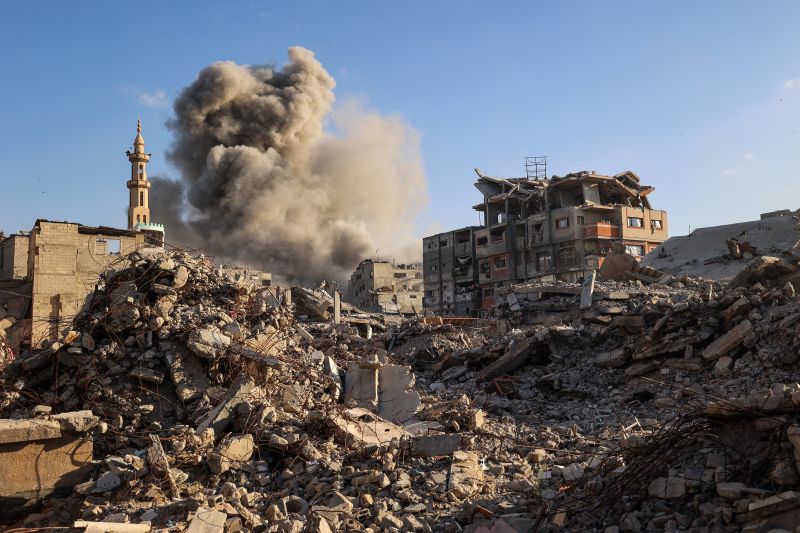
International aid organizations, including the Red Cross and Médecins Sans Frontières, have urged both parties to ensure safe corridors for medical supplies and food delivery. However, continued security threats make logistics difficult.
Global Reactions and Diplomatic Efforts
The world’s major powers have expressed concern over the fragile truce:
- United States: Urged both sides to uphold the ceasefire and resumed discussions for a “two-state solution.”
- European Union: Called for international monitoring teams to supervise peacekeeping in Gaza.
- United Nations: Passed a resolution demanding unrestricted humanitarian access.
- Arab League: Emphasized that peace cannot exist without Palestinian statehood recognition.
Despite these efforts, analysts believe the region could relapse into violence unless a long-term political framework is established. Former U.S. Secretary of State Antony Blinken has reiterated that “ceasefires are temporary unless justice becomes permanent.”
Public Sentiment in Israel and Gaza
Inside Israel, public opinion is deeply divided. While many citizens support their government’s right to self-defense, others question the humanitarian cost. Peace protests have re-emerged in Tel Aviv, urging leaders to prioritize diplomacy over destruction.
In Gaza, residents express exhaustion and hopelessness. “We have seen ceasefires come and go,” one resident told Flash Global News. “We just want electricity, food, and peace.”
Role of Technology and Media in the Conflict
Social media platforms have once again played a dual role—amplifying awareness and misinformation. AI-generated visuals and deepfakes circulating online have confused audiences and complicated the verification of real-time war footage. Tech experts are urging for stricter fact-checking mechanisms as digital propaganda increasingly shapes global perception.
Global Economic and Political Impact
The ongoing instability in the Middle East continues to influence oil markets and investor sentiment. Brent crude prices surged 5% in October due to fears of supply disruption. Meanwhile, defense contractors in the U.S. and Europe have reported a rise in military equipment orders, highlighting how regional wars often trigger global economic shifts.
Impact on Pakistan and South Asia
Countries like Pakistan, Indonesia, and Malaysia have condemned the civilian casualties and called for UN-led peace negotiations. Pakistan’s Foreign Office released a statement reaffirming support for the Palestinian cause and emphasizing the need for a permanent end to occupation.
South Asian economies, already affected by inflation and energy prices, could see additional pressure if the conflict escalates further and oil supply chains tighten.
Voices for Peace
Several international figures have spoken about the need for sustained peace efforts. Pope Francis, during his address in Rome, said: “The children of Gaza and Israel deserve a future free from fear.” Similarly, global celebrities and NGOs have launched campaigns to raise awareness about displaced families and civilian trauma.
Comparison with Previous Ceasefires
Historically, Israel–Hamas ceasefires have rarely lasted beyond a few months. The 2021, 2023, and 2024 truces all broke down due to violations or political mistrust. The 2025 truce, although more internationally supervised, faces the same structural weaknesses—lack of mutual trust, unclear terms, and competing regional agendas.
Lessons from the Past
Experts argue that sustainable peace requires addressing root causes: territorial disputes, humanitarian inequality, and international accountability. Short-term truces without political reform often reset the cycle of violence rather than ending it.
Media Coverage and Global Awareness
From CNN to BBC, major media outlets are giving daily updates on the Gaza situation. Social activists on platforms like X (formerly Twitter) and TikTok have made hashtags like #CeasefireNow and #GazaUnderFire trend worldwide, amplifying public pressure on governments to act.
Meanwhile, misinformation and politically driven narratives continue to divide global audiences. UN media monitoring groups have requested tighter regulations for war-related online content to curb hate speech and digital extremism.
Possible Future Scenarios
Analysts propose three possible paths for the post-ceasefire landscape:
- Optimistic Scenario: Both sides agree to gradual demilitarization under international observation, allowing economic rebuilding in Gaza.
- Realistic Scenario: Ceasefire holds intermittently, but underlying tensions persist with occasional border clashes.
- Pessimistic Scenario: The truce collapses entirely, triggering another major round of conflict by early 2026.
While peace remains uncertain, the global community’s involvement—especially through the UN, OIC, and EU—will determine whether diplomacy succeeds or fails once again.
Expert Analysis
Dr. Leila Haddad, a Middle East analyst at the University of Geneva, notes: “Each ceasefire looks like a reset, not a resolution. Unless socio-economic reconstruction accompanies disarmament, peace will remain elusive.”
Similarly, security strategist Michael Oren suggests that both Israel and Hamas have internal political reasons to maintain hostility, as each side uses conflict narratives to consolidate domestic power.
Conclusion
The 2025 Israel–Hamas ceasefire is both a relief and a warning. It shows that global diplomacy can still pause wars but cannot yet end them. As the world watches, the focus must shift from ceasefire announcements to conflict prevention and humanitarian rebuilding.
Without accountability and sustained dialogue, history risks repeating itself once again in the Holy Land.
Related News You May Like
- Russia Launches 550 Missiles on Kyiv – War Escalation 2025
- G7 Summit 2025 Begins in Canada – World Leaders on Economy & Climate
- Saudi Arabia Announces 5-Year Residency for Foreign Freelancers
FAQs
1. Is the Israel–Hamas ceasefire still holding?
As of October 22, 2025, the ceasefire is technically in place, but both sides report intermittent violations.
2. Who brokered the 2025 ceasefire?
The ceasefire was mediated by Egypt, Qatar, and the United States, with support from the United Nations.
3. What are the main obstacles to lasting peace?
Deep-rooted mistrust, political divisions, humanitarian crises, and lack of a clear roadmap toward a two-state solution.
4. How has the global community responded?
Most nations have called for restraint and long-term peace talks, though approaches vary between Western and Arab blocs.
5. What can the world do to help?
Pressure both sides diplomatically, increase humanitarian aid, and support reconstruction efforts in Gaza without politicization.
Author: Flash Global News Editorial Team
Published by: FlashGlobalNews.online
Labels: Israel, Hamas, Gaza Conflict 2025, Middle East, Global Politics, Humanitarian Crisis, War and Peace
Follow Us for More Updates:✅ Visit: FlashGlobalNews6
📢 Stay tuned for real-time news updates.
Comments
Post a Comment
Thanks for reading! Share your thoughts below — respectful and relevant comments only, please.